
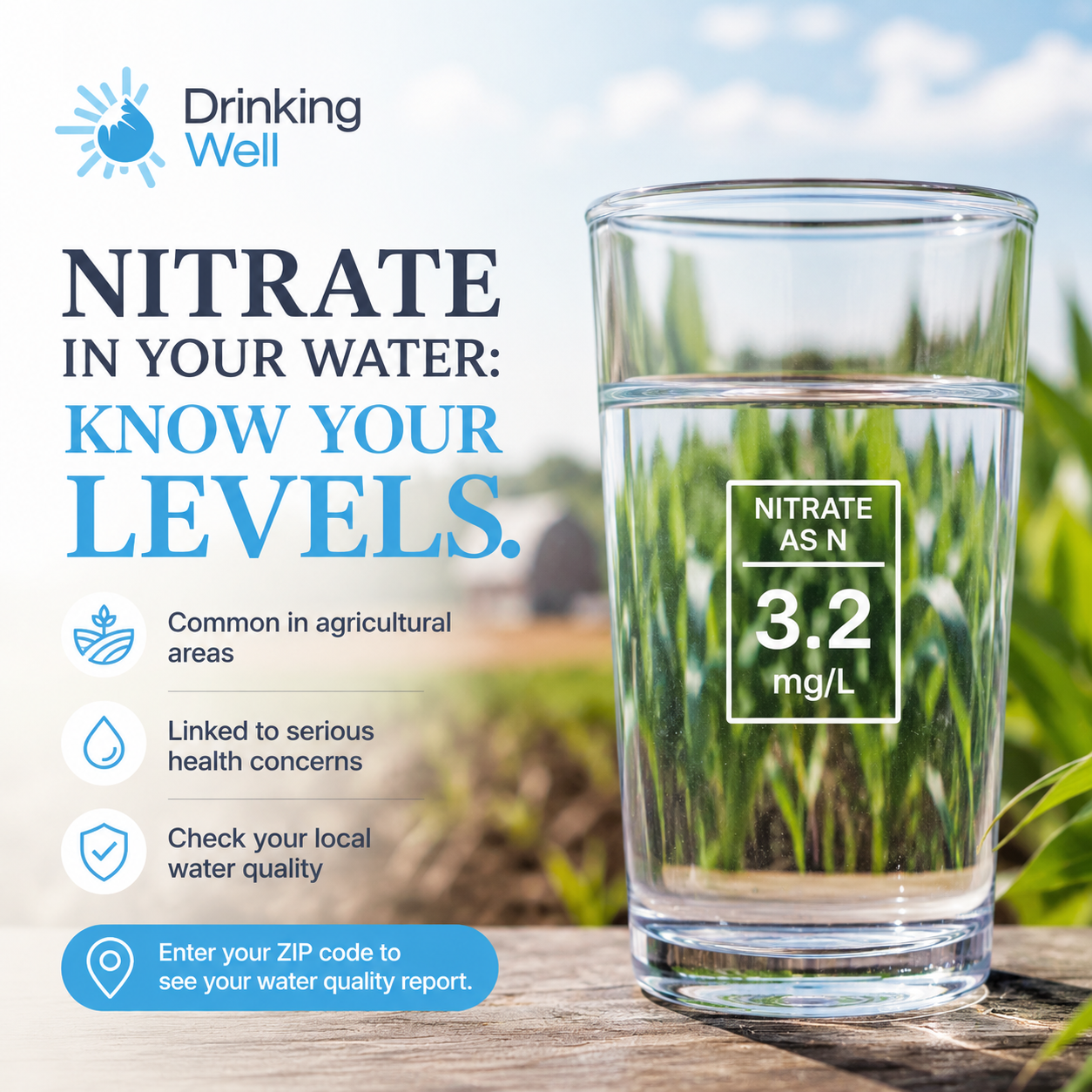
Recent reports have highlighted concerns about nitrate contamination in drinking water across the United States. Nitrate is one of the most common contaminants found in groundwater and municipal water supplies, particularly in agricultural regions where fertilizer and livestock operations are common.
But what does a nitrate result actually mean for your family?
What Is Nitrate?
Nitrate is a naturally occurring compound containing nitrogen and oxygen. While it occurs naturally in the environment, elevated levels in drinking water are often associated with:
- Agricultural fertilizer runoff
- Livestock manure
- Septic systems
- Wastewater discharge
Because nitrate is colorless, odorless, and tasteless, most people have no way of knowing whether it is present in their drinking water without testing.
Why Are People Talking About Nitrate?
The current EPA Maximum Contaminant Level (MCL) for nitrate in drinking water is 10 mg/L.
This standard was originally established to help prevent infant methemoglobinemia, commonly called "blue baby syndrome."
In recent years, researchers have studied whether long-term exposure to nitrate at levels below the federal limit may also be associated with other health concerns. While research is ongoing, some studies have examined potential links to:
- Colorectal cancer
- Thyroid disorders
- Low birth weight
- Neural tube birth defects
As a result, many public health researchers believe nitrate deserves closer attention than it has historically received.
Are Nitrate Levels High In My Area?
The answer depends entirely on where your water comes from.
Nitrate levels can vary dramatically between neighboring communities and even between different water sources within the same region.
The best first step is understanding the water quality data available for your area.
What's In My Water?
If you provide your email and zip code, we'll help you review available drinking water data for your area, including nitrate levels and other commonly reported contaminants.
Understanding your water is the first step toward making informed decisions about treatment, filtration, and overall water quality.


