
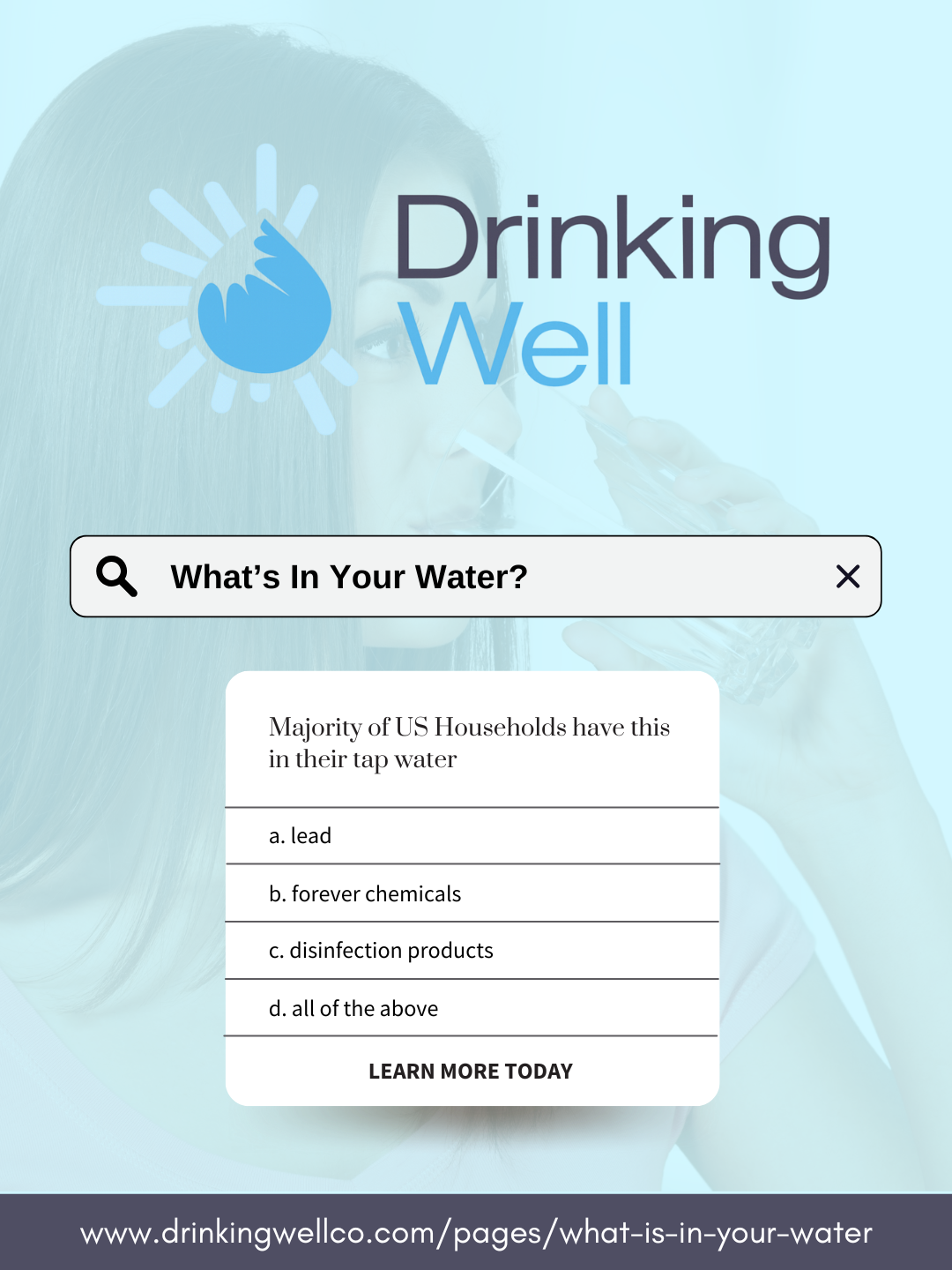
What’s Really in Your Drinking Water?
Most people assume that if water comes from the tap, it must be clean and safe.
Municipal water in the United States is regulated, it can still contain a variety of contaminants that may impact taste, quality, and even long-term health. Understanding what may be in your water is the first step toward protecting your household.

At DrinkingWellCo, our goal is to help homeowners better understand their water quality and take the right steps to improve it.
Why Your Water May Contain Contaminants
Even when water is treated at a municipal facility, contamination can occur at several points:
- Natural sources like minerals in soil and rock
- Aging pipes and plumbing infrastructure
- Agricultural runoff from fertilizers or pesticides
- Industrial pollution or chemical waste
- Water treatment byproducts
While drinking water regulations limit many contaminants, trace levels of certain compounds may still be present in tap water depending on where you live.
Common Contaminants Found in Tap Water
Here are some of the most common substances that may be present in household drinking water.
Lead
Lead can enter drinking water through older plumbing, solder, or fixtures. Even small amounts can be harmful, especially for children, as exposure may impact brain development and neurological health.
PFAS (Forever Chemicals)
PFAS are synthetic chemicals used in many consumer products and industrial processes. They are known as “forever chemicals” because they do not easily break down in the environment and can accumulate over time.
Nitrates
Nitrates often enter water supplies from fertilizer runoff, livestock waste, and wastewater discharge. High nitrate levels in drinking water can be especially dangerous for infants.
Heavy Metals
Heavy metals such as arsenic, chromium, and mercury may enter water supplies through natural deposits in the earth or industrial activity. Long-term exposure can impact overall health and water safety.
Disinfection Byproducts
Chemicals like trihalomethanes (THMs) can form when chlorine used to disinfect water reacts with organic matter. These byproducts may be present in some treated municipal water systems.
Why Water Quality Varies by Location
Water quality can vary greatly depending on where you live. Several factors influence what may be present in your water, including:
- Your local water source (surface water or groundwater)
- Nearby agriculture or industry
- The age of local plumbing infrastructure
- Municipal water treatment processes
Because of these differences, water quality in one city may look very different from water quality in another.
Understanding Your Local Water
One of the best ways to understand your water is by reviewing a localized water report. These reports help identify potential contaminants that may be present in your area based on regional testing data.

DrinkingWellCo offers tools that allow homeowners to check water quality information by location, helping you better understand what may be in your water supply.
Take Control of Your Water Quality
Clean water is essential for drinking, cooking, and everyday life. By learning what may be present in your tap water, you can take steps to improve your water quality and make informed decisions for your household.
Understanding your water is the first step toward ensuring that the water you drink every day is as clean and safe as possible.
Please visit our page, What's In Your Water.
We take your zip code and email and figure out what is in your water.
Also we are providing a limited time discount, if you purchase a Housepure Kit from us, which gets sent to the lab for futher water testing, we take $53 off on the system of your choosing.


